Source custom printed portable fortune wheel for events, trade shows, and promotions
Find 30 options for the custom printed portable fortune wheel designed for entertainment and commercial use. Buyers can compare specifications, pricing, and customization features from verified suppliers in China.
Key considerations
Products List


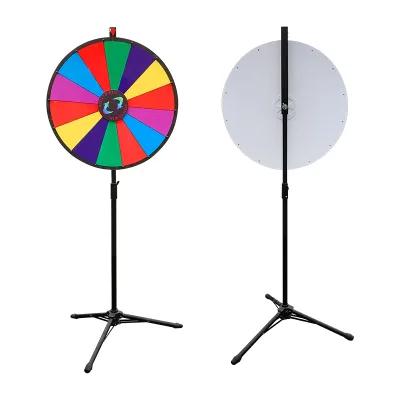
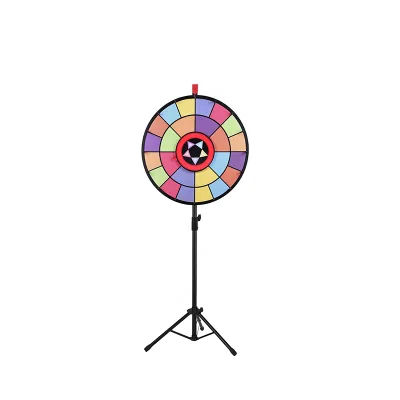
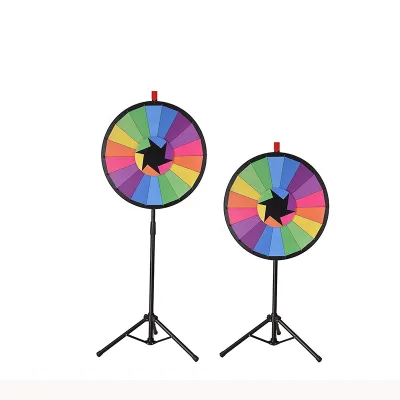
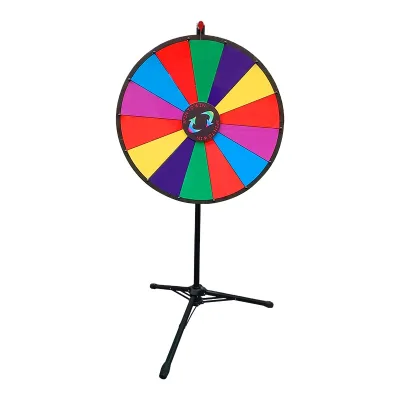
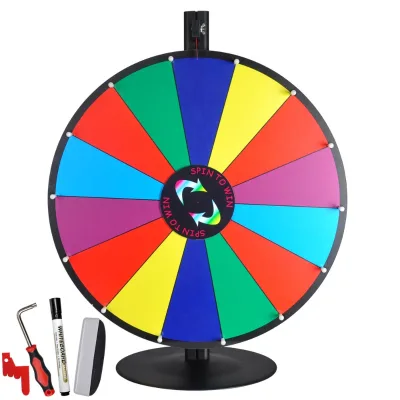
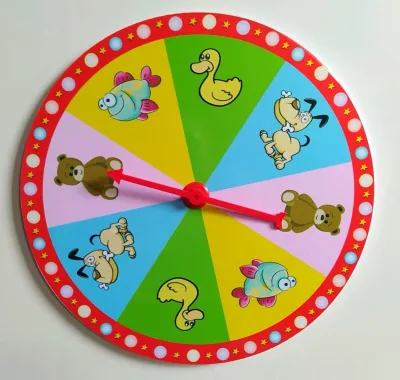
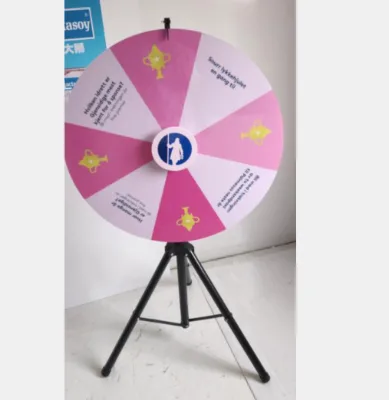


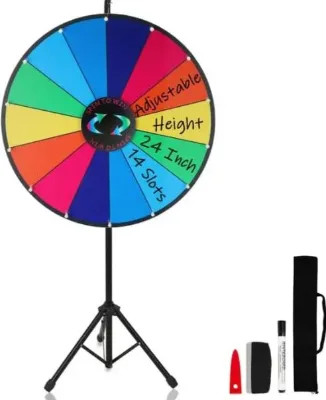




Comprehensive Sourcing Guide
Strategic Sourcing Guide for Custom Printed Portable Fortune Wheels
Procuring a custom printed portable fortune wheel requires a disciplined approach that balances aesthetic customization with mechanical reliability and logistical feasibility. For B2B buyers, the "custom printed portable fortune wheel" represents a specific category of promotional and entertainment equipment where the visual impact of the branding must not compromise the structural integrity of the spinning mechanism. This guide synthesizes observed market data and technical attributes to provide a framework for evaluating suppliers, defining specifications, and managing the procurement lifecycle without relying on unverified claims.
Defining Technical Specifications and Material Integrity
The foundation of a successful procurement begins with precise technical definition. Based on observed market data, the core material composition for these units typically involves Acrylic and PVC. Acrylic is frequently cited for its clarity and rigidity, offering a premium look suitable for high-end trade shows, while PVC provides flexibility and durability for more rugged, portable applications. Buyers must verify the specific material grade, as the combination of these materials affects the wheel's weight and resistance to warping under temperature variations.
Physical dimensions are a critical variable in this category. Market observations indicate standard sizes ranging from 18 inches to 24 inches in diameter. The choice between these sizes directly impacts the "Single package size," which has been observed in ranges such as 60x30x15 cm for smaller units and 80x80x15 cm for larger configurations. These dimensions dictate the shipping volume and the required storage space at the destination. Furthermore, the "Single gross weight" is a vital metric for logistics planning; observed data points to a weight of approximately 6.0 kg per unit. This weight class suggests a portable design that can be easily transported by a single operator, yet heavy enough to remain stable during operation.
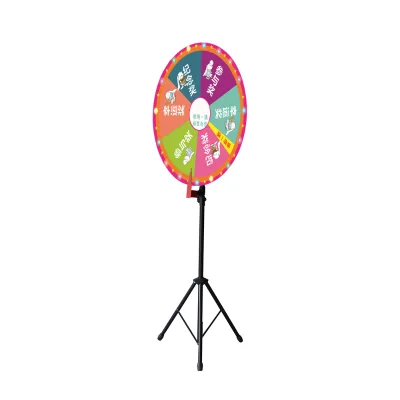
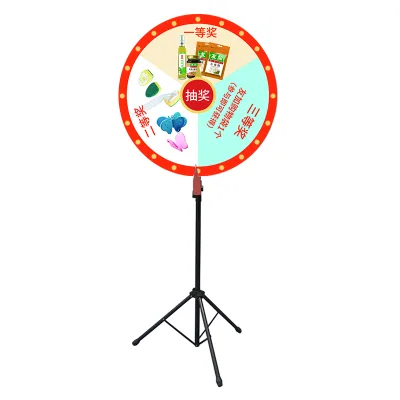
The structural design also varies by application. The "Type" of the wheel is often categorized as either "Tripod Standing Type" or "Dual Use Type." The tripod configuration offers a self-contained, stable base ideal for floor-standing entertainment at events, while dual-use models may offer foldable legs or alternative mounting options for versatility. The "Style" is frequently described as "Corner" or "Popular Used," indicating designs that fit specific spatial constraints or follow prevailing aesthetic trends in the entertainment sector. Buyers should explicitly request CAD drawings or 3D renders to confirm that the chosen model number, such as DF-PW01 or DF-PW02, aligns with their spatial requirements before finalizing the order.
Compliance, Certification, and Safety Standards
In the realm of B2B procurement, compliance is not merely a formality but a risk mitigation strategy. While specific test results are not universally guaranteed for every listing, the industry standard for these products often references ISO certification. Buyers should explicitly request proof of ISO compliance from the supplier, as this indicates adherence to international management system standards for quality and consistency. However, the presence of a standard label does not automatically validate the safety of the specific unit; it is the supplier's responsibility to demonstrate that the manufacturing process adheres to these standards.
Safety is paramount, particularly when the product is used in "Commercial Use" environments involving public interaction. The "Function" of the wheel is "Lottery" or "Entertainment," which implies mechanical movement. Buyers must verify that the spinning mechanism includes safety features to prevent pinching hazards, especially if the wheel is intended for use near children or in high-traffic areas. The "Feature" of being "Easily Cleaned" is also a compliance-adjacent attribute, as it ensures the product can be sanitized according to health regulations for trade shows and public activities.
Additionally, the "Customized" nature of the product introduces compliance complexities regarding intellectual property and labeling. If the "Logo" is "Custom Printed" or "Custom Logo," the supplier must ensure that the printing process does not use inks or materials that violate local environmental or safety regulations in the destination country. Buyers should verify that the "Digital Printing" method used is compatible with the specific substrate (Acrylic or PVC) and does not release volatile organic compounds (VOCs) that could be problematic in enclosed event spaces.
Cost Drivers and Pricing Structure Analysis
Understanding the cost structure of custom printed fortune wheels is essential for budgeting. The observed price range in the market is vast, spanning from $0.59 to $9,100. This extreme variance indicates that price is heavily dependent on the level of customization, material quality, and order volume. A unit at the lower end of the spectrum likely represents a standard, non-customized model with minimal branding, whereas the higher end reflects complex customizations, premium materials, or large-scale industrial units.
The "MOQ" (Minimum Order Quantity) is a significant cost driver. Data shows an MOQ range from 1 unit to 1,000 units. For buyers requiring a single unit for a specific event, the per-unit cost will be significantly higher due to the fixed costs of setup and tooling. Conversely, buyers ordering in bulk can leverage economies of scale to reduce the unit price. The "Selling Units" are typically listed as "Single item" or "1 set," which clarifies that the price quoted usually includes the wheel, the stand, and the necessary accessories.
Packaging costs also influence the final price. The "Packing" method varies, with options including "Box," "Carton Box," or "Playwood Box." Wooden crates (Playwood Box) are more expensive but offer superior protection for international shipping, reducing the risk of damage during transit. Buyers must weigh the cost of premium packaging against the risk of receiving damaged goods. Furthermore, the "Customization" availability allows for variable costs; adding a "Custom Printed Logo" or "Customized Color" will incur additional charges compared to selecting a "Standard color."
Typical Applications and Usage Scenarios
The versatility of the custom printed portable fortune wheel makes it suitable for a wide array of "Entertainment" and "Promotion" scenarios. The primary "Usage" categories include trade shows, promotional activities, and commercial events. In a trade show setting, the wheel serves as an interactive booth attraction, drawing foot traffic and engaging potential clients through the thrill of the spin. The "Feature" of being "Durable" and "Reusable" ensures that the unit can withstand the rigors of repeated setup and teardown across multiple events.
For promotional activities, the wheel acts as a branded giveaway mechanism. Companies often use these wheels to award prizes, creating a memorable brand experience. The ability to customize the "Logo" and "Color" allows the wheel to serve as a mobile billboard, reinforcing brand identity wherever it is displayed. The "Application" as "Commercial Use" extends to retail environments, where the wheel can be used for customer engagement, loyalty programs, or in-store events.
The "Style" of the wheel, often described as "Popular Used," suggests that the design is adaptable to various themes. Whether for a corporate gala, a community fair, or a product launch, the wheel can be tailored to match the event's aesthetic. The "Mode" being "Electric" is a key differentiator, as it automates the spinning process, ensuring fairness and reducing the physical effort required by event staff. This automation is particularly valuable for high-volume events where consistency and speed are critical.
Supplier Evaluation and Verification Protocols
Evaluating a supplier for custom printed fortune wheels requires a rigorous vetting process. The "prod_origin" is frequently listed as "Guangzhou of China" or "Hubei, China," indicating that the majority of manufacturing capacity is concentrated in these regions. Buyers should verify the specific factory location to assess logistics lead times and potential supply chain risks. The "Delivery" time is a critical metric, with observed ranges from 3 to 30 days after payment and artwork approval. Buyers must confirm the specific lead time for their order, as delays in artwork approval can significantly impact the delivery schedule.
The "Brand name" associated with these products, such as "DF banner," can be a useful starting point for research, but buyers should not rely solely on brand reputation. Instead, they should request references from previous clients who have ordered similar customizations. The "Customization" availability is a key indicator of a supplier's capability; a supplier that offers "Custom Logo" and "Customized Color" demonstrates flexibility, but buyers must verify the quality of these customizations through samples or portfolio reviews.
Quality control is another vital aspect of supplier evaluation. Buyers should inquire about the supplier's internal quality assurance processes, particularly regarding the "Single gross weight" consistency and the structural integrity of the "Tripod Standing Type" or "Dual Use Type" frames. The "Feature" of being "Portable" implies that the unit must be easy to assemble and disassemble; buyers should request a video demonstration of the assembly process to ensure the instructions are clear and the components fit together seamlessly.
Quality Control and Long-Term Procurement Considerations
Ensuring long-term value from a custom printed fortune wheel procurement involves establishing robust quality control measures. The "Feature" of being "Easily Cleaned" is not just a convenience but a requirement for maintaining the product's appearance over time. Buyers should specify cleaning protocols in the purchase agreement to ensure the supplier provides materials or instructions that facilitate maintenance. The "Material" choice of Acrylic and PVC must be verified for resistance to scratches and fading, especially if the wheel will be used outdoors or in high-traffic areas.
Packaging integrity is crucial for long-term storage and transport. The "Single package size" and "Packing" method must be optimized to protect the wheel from damage during shipping. Buyers should insist on a packaging test or a detailed description of the packaging materials to ensure the unit arrives in pristine condition. The "Delivery" time of 3-15 days or 7-15 days should be factored into the project timeline, with a buffer for potential delays in "art work" approval.
For long-term procurement, buyers should consider the scalability of the supplier. If the initial order is successful, the ability to place repeat orders with consistent quality is essential. The "MOQ" of 1 unit or 1 set allows for low-risk testing, but buyers should negotiate terms for future bulk orders to secure better pricing and lead times. The "Customization" process should be streamlined for future orders to reduce the time required for artwork approval and production.
In conclusion, sourcing a custom printed portable fortune wheel requires a balance of technical precision, compliance awareness, and strategic supplier management. By focusing on the specific attributes of material, size, and customization, and by rigorously verifying supplier capabilities and delivery timelines, buyers can secure high-quality units that meet their promotional and entertainment needs. The observed data provides a solid foundation for decision-making, but the ultimate success of the procurement depends on the buyer's diligence in defining requirements and validating supplier claims.
FAQs
What materials are used for custom printed portable fortune wheels?
These wheels are typically constructed from Acrylic and PVC materials. Acrylic offers clarity for premium looks, while PVC provides flexibility and durability for rugged portable applications.
Which sizes are available for the custom printed portable fortune wheel?
Standard sizes range from 18 inches to 24 inches in diameter. The specific size choice impacts the single package dimensions and overall shipping volume required for the unit.
Can the product be customized with a specific logo and color?
Yes, customization is available for both custom printed logos and customized colors. Buyers can request digital printing on the Acrylic or PVC surfaces to match their branding needs.
How long does delivery take after payment and artwork approval?
Delivery times typically range from 3 to 30 days after payment and artwork are received. Specific lead times vary by supplier, with some options offering 3-15 days or 7-15 days.
What is the minimum order quantity for a custom printed portable fortune wheel?
The minimum order quantity can be as low as 1 unit or 1 set. Some suppliers may have higher MOQs up to 1000 units depending on the level of customization required.
Where are these products typically manufactured?
Products originate from manufacturing hubs in China, specifically Guangzhou and Hubei regions. Buyers should verify the specific factory location to assess logistics and supply chain reliability.
What type of packaging is used for shipping the custom printed portable fortune wheel?
Packaging options include carton boxes, wooden crates, or standard boxes. The single package size varies, often measuring 60x30x15 cm or 80x80x15 cm depending on the model.